For individuals requiring urgent palliative care and home stabilization, realizing there may only be a short time remaining brings one simple hope to the forefront: they wish to be in their own bed, surrounded by the people and memories that matter most. There is nothing like the comfort of being at home which a hospital room can’t provide.
When moving someone home to access their end-of-life care needs, it is important that the home is safe for the individual and for those accessing the home. If a person decides to spend the remaining days of their life at home, rapid palliative care home stabilization becomes an urgent clinical necessity. There are many time constraints that palliative care teams encounter. Yet they strive to carry out a patient’s last request.
When the Home Cannot Receive End-of-Life Care
For the hospital discharge coordinator and social care team an unsuspecting bump in the road occurs frequently during end-of-life planning. The patient is medically fit to leave the ward but at a home visit, it is found that the home environment is not fit for support. There could be objects in the walkways and hazards can be found anywhere.
It’s because of very real reasons that these living conditions occur. A long period of suffering from a severe disease consumes the energy of the body. Family caregivers grow exhausted while putting every bit of energy into basic daily survival. As health goes down, so do cleaning habits. At other times, the extreme clutter and hoarding occurred long before the final diagnosis was made. All these physical hurdles need to be overcome swiftly by a palliative discharge team. When time is ticking, each delay keeps a person locked in a clinical ward, instead of enjoying peaceful sleep in their own bed.
The Strict Criteria for Home Hospice Setup
The house goes through a number of stringent checks before community nurses are given permission to take a patient home. Specialized hospital beds or oxygen systems cannot be installed until the required access is cleared by rapid palliative care home stabilization in a safe manner so that access to the zones are clear.
Conventional household furniture is unable to accommodate complex end-of-life care. Rather, heavy profiling beds which are adjusted electronically need to be brought in by clinical teams. These beds require a wide enough space. Nurses should have sufficient space to turn, wash and move the patient safely, otherwise they run many risks.
There must also be reliable, open wall outlets in the room to power dynamic air mattress and syringe drivers. There are extra rules for respiratory equipment. Oxygen concentrators and cylinders need to be ventilated and have a clear route to and from them with no obstructions or trip hazards to the floor. There must be a clear passage for paramedics, hospice nurses, and visiting family members from the front door to the bed.
Rapid Environmental Clearance Protocol
In case of an emergency, a solution of the barriers must be planned. A rapid stabilisation of the patient in the home setting is a complex process that demands special teams to move quickly and efficiently through critical access points, with minimal disruption to the household, within 24 to 48 hours. Grant A Smile uses an emergency preparedness system, designed for such critical times.
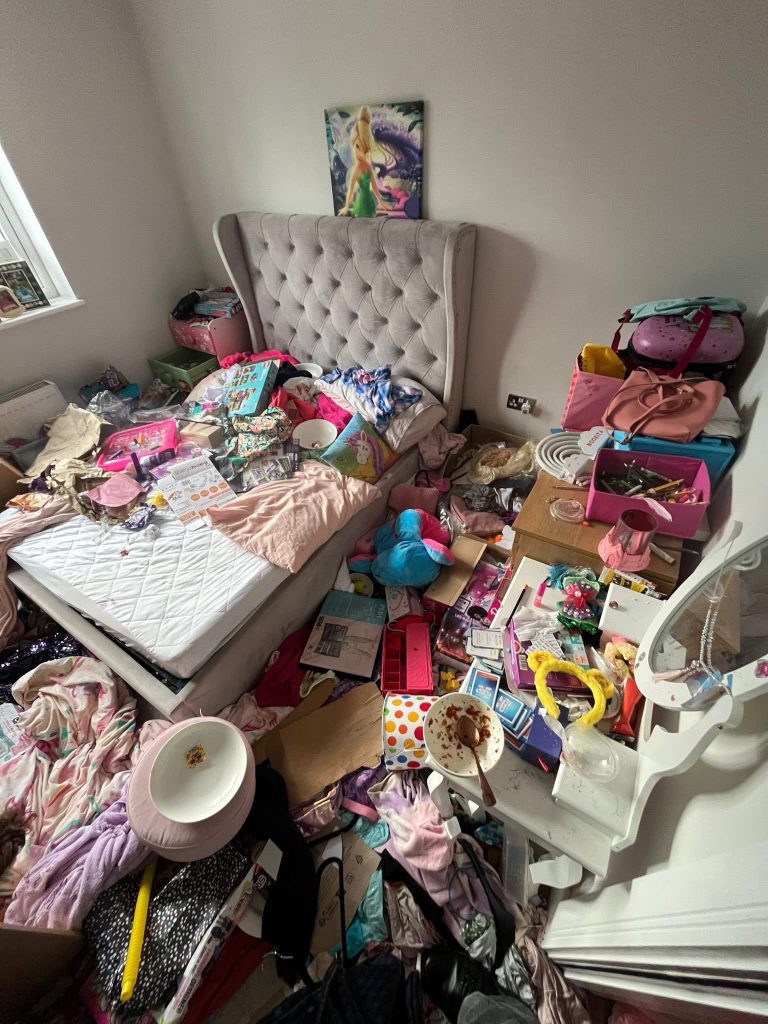
The work begins with targeted pathway clearance. The team’s work focuses on the main bedroom, direct access to the bathroom, and the main entrance hallway. Sorting up a whole house in the midst of an emergency will slow down the process. Technicians have first clearance to the critical areas and then delivery teams install medical equipment immediately.
After opening up the space, the crew performs clinical sanitization. They disinfect the surfaces that need special attention, remove biohazard material and old contaminants. This will help to prevent any mold or infection from reaching the patient’s weakened immune system. During the entire time, team members get on in unmarked vehicles. Unmarked vans provide an element of privacy for families, safeguard residents from neighbours’ curiosity and prevent the focus being on anything other than care.
Deep Respect and Boundaries
A crisis of health necessitates a lot of emotional support to be able to clear an environment. Things that have accumulated over the years, reflect a person’s identity. Going rushing in, and just dumping things away, can cause a lot of emotional distress to a dying man.
Unlike traditional waste disposal services, our approach to palliative care home stabilization treats personal belongings with profound dignity and explicit family consent. Wherever possible, our staff consults with the patient. When the patient is too ill, team members converse with named family members before moving anything out of the way.
We identify and preserve their valuables, photo albums, legal papers, and mementos. These are packed and stored with great care and out of the way. The aim is to create an environment of tranquility and security for health care and yet maintain the familiar atmosphere of home. It is important that the room doesn’t become like a hospital room.
Alleviating the Caregiver Burden and Protecting Young Carers
The family members of someone with a terminal illness or disease are subjected to great physical stress. When a spouse’s or partner’s home becomes chaotic, chances are they will feel a great deal of shame. They are conscious that they should have done domestic duties at the same time they were functioning as nurses.
Children and teens at home are likely to assume adult responsibilities. These young carers are involved in running errands, clearing up after medical emergencies and caring for younger siblings. This is the time when people can remove this heavy load of physical work from family’s shoulders by providing practical help for cleaning. It gives them the opportunity to put down the cleaning clothes and spend the time they have left with their parents to talk and say goodbye.
The real value of palliative care home stabilization is that it relieves family members of panic, allowing them to spend their remaining time simply being present. We recognize this, which is why through our services, young carers are identified and linked with child-focused programs for support and special programmes are provided to bring a smile to their face on the bad days.
Reach out Today!
To coordinate an urgent palliative care home stabilization assessment with our clinical liaison team, contact us today. We collaborate directly with hospital discharge teams, social workers, and hospice staff to complete home clearances quickly and respectfully.