Living with a severe insect or rodent problem creates stress for everyone involved. If an infestation spreads in a home, the first task is to have safe clutter removal for health hazard homes before any chemical eradication is initiated. A lot of people call in an exterminator, thinking that they will be able to get rid of the bugs that are infesting their home in no time. They then become annoyed when the exterminator doesn’t touch a single bait box. Understanding how spaces interact with pest biology helps explain why professional clearance must happen first.
Why Exterminators Turn Away at the Door
A common standoff occurs every week across housing sectors. A local pest control company arranges to visit the house to have the mice, rats, cockroaches, or bedbugs treated. The technician enters, sees the area, and straight up declines to work on it.
It is not that they don’t want to work. Pest professionals must have clear sightlines to evaluate activity. They should have direct contact with the walls of the room, heating pipe entry points, and skirting boards, in order to be able to safely place traps. Typical household cleaning companies are also not allowed to go into these buildings as there are obvious health risks. This deadlock situation makes it impossible for the occupant to stay in the space, unsure of how to break the deadlock.
The Mechanics of Failed Treatments
The pest problem will continue to exist because clutter offers unlimited harbor. Warm nesting material is provided in the form of cardboard boxes and stacked clothes. The piles provide protection to the pests from sprays, gel baits, and monitoring stations. Chemical treatments only dislodge vermin from wall cavities, but will not destroy the colony at the source if the poisoning measures are not taken by professional safe clutter removal for health hazard homes.
Pests follow scent trails along walls, and will hide behind heavy items when they feel vibrations or light. Exterminators won’t be able to identify the main structural damage if floor edges are still covered with items. Cracks or gaps around heat pipes or around the floor remain unnoticed.
Surface fogging treatments and aerosols do not work in dense environments. Domestic goods do not allow insecticides to penetrate the thick layers of goods. Airborne sprays do not kill insects but disturb the colony forcing the bedbugs and roaches to go deeper.
Managing Biological Contaminants
Moving and disturbing old possessions in an infested home can be very hazardous to one’s health. The dried urine of rodents and insect casings fall apart easily. When these materials are moved, particles are thrown into the air which can expose individuals to harmful substances, such as Hantavirus, Leptospirosis, and serious allergens to breathing.
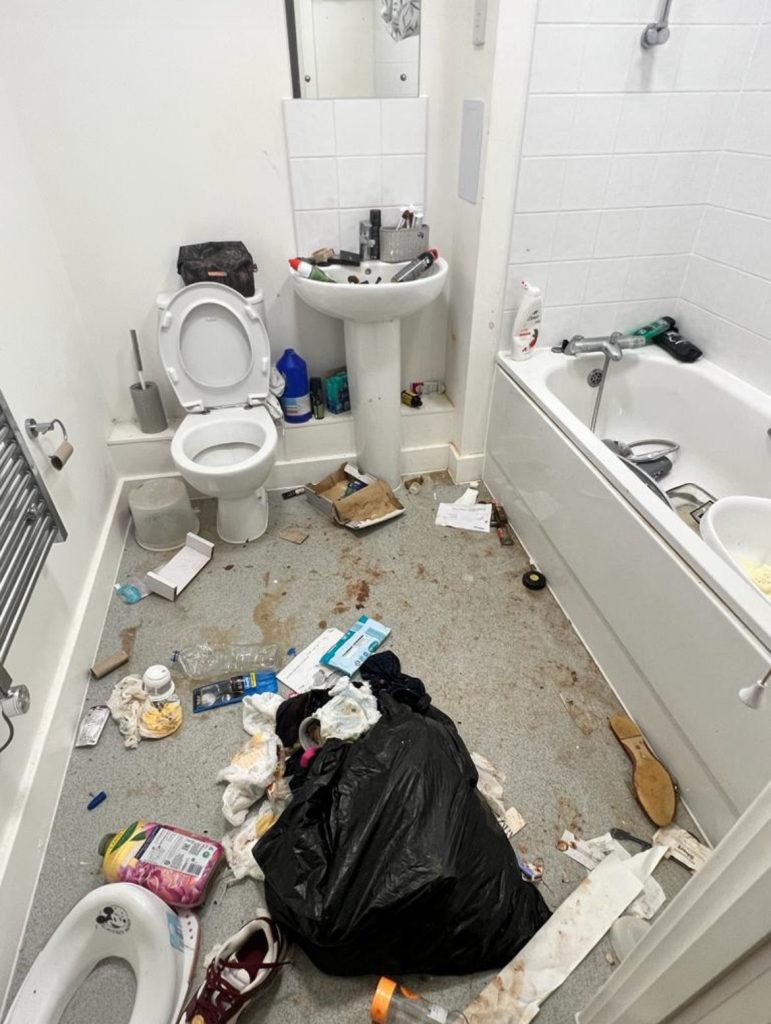
Specialist teams are used to ensure the following safety guidelines are put in place to manage these risks. Grant A Smile technicians are fully equipped with Category 3 Personal Protective Equipment, that includes filtered respirators as well as sealed overalls. When we lift items off the floor, our crews use HEPA filtered air scrubbers, and certified biocides to reduce and eliminate airborne pathogens. Safe clutter removal for health hazard homes is a priority to prevent exposure to airborne biological hazards for the building’s occupants.
Field teams sort through belongings methodically. Technicians find contaminated waste and pack it in line with the rules of the Environment Agency upper tier carrier rules. Our techs take extra precautions to ensure safe clutter removal for health hazard homes containing active rodent droppings and biological decay, using strict controls that we have created to ensure the job is done safely. Meanwhile, experts sort through items which can be safely disinfected, allowing families to get critical paperwork, photos and other sentimental items back.
Creating the Exterminator’s Pathway
Exterminators can’t do well unless they have an open layout to use professional tools. Clearance teams set up the area making specific operation zones in all the rooms.
First, an empty buffer, 18 to 24 inches wide, is swept around all perimeter walls. Appliances, such as washing machines and refrigerators are pushed forward so that the flooring underneath is visible. This open border provides the exterminator with the opportunity to check baseboards, look for rodent runs and install rodent bait boxes or insect tracking dust in direct contact with wall junctions.
Second, teams open up critical utility spaces. Cleaning out underneath kitchen sinks, around water boilers and on electrical meter boxes reveals pipe openings. Once exterminators have sealed pest highways between wall voids with wire mesh, steel wool and sealing foam, they can help prevent infestation.
Last but not least, teams sanitize food preparation surfaces. Washing grease films, crumbs, and packaging spills will remove competing food options. Hungry pests can’t find easy meals and therefore quickly go to the bait stations, resulting in a quick and effective treatment.
Breaking the Re-Infestation Cycle Through Psychotherapeutic Support
Properties often tend to fall back into high infestation if clearance stops at physical cleaning. A buildup of clutter is typically caused by an occupant having a chronic health condition or grief. If the floor is cleared, without addressing the needs of the person, domestic neglect and pests will come back in a few months.
Grant A Smile breaks this pattern by combining ongoing psychotherapeutic support with clearance. We are aware that possessions often represent emotional safety for vulnerable adults. We work to uncover what is really behind the neglect in the home and help our clients develop effective and practical skills to maintain a manageable floor plan.
Lasting pest eradication requires sustained domestic hygiene, which is why safe clutter removal for health hazard homes must be reinforced with aftercare support to prevent environmental relapse. This is a dual approach to stabilize tenancies, ensure the condition of the property and avoid expensive re-enforcement with local councils and housing associations.
Reach out to Grant A Smile
Grant A Smile is a registered Community Interest Company (CIC). All of the profits from our commercial cleaning services are used to cover free and subsidized biohazard clean-up for low income families, cancer patients and young carers.
To schedule an on-site risk assessment for safe clutter removal for health hazard homes, contact us to speak directly with our clearance coordinators.